September 9, 2025
•
Is Buying Off-The-Plan A Good Idea?
Explore the pros and cons of buying off-the-plan properties in Australia. Learn about capital growth, stamp duty savings, and important considerations for investors.
Investment
•
3
min read
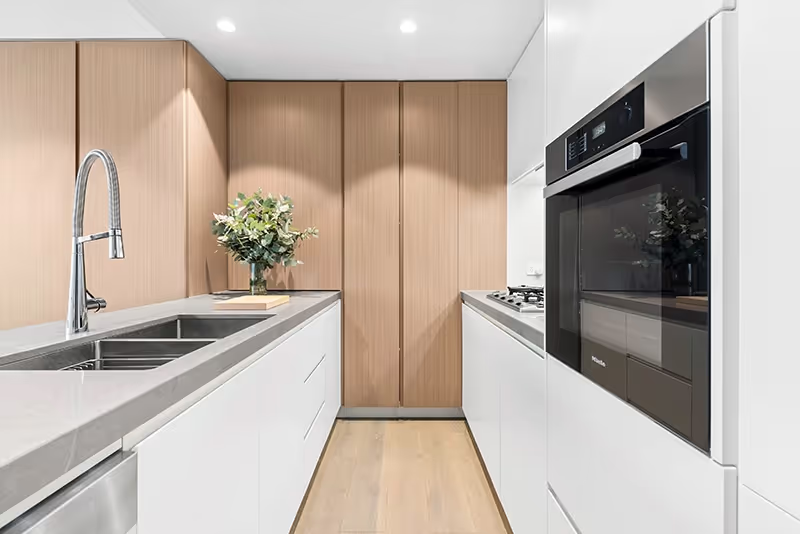

Investing in real estate is a big decision, and one avenue that has gained significant popularity in Australia is purchasing property "off-the-plan." This approach allows buyers to secure a property before its completion, often at a lower price than its market value upon completion. What are the key aspects of buying property off the plan in Australia, and what information do you need to make an informed decision?
Off-the-plan properties often appreciate in value during construction. Since you don't pay the full purchase price before settlement, you can benefit from low initial costs while your property grows in value. You can research the 5-year median price trends of your preferred suburbs on RealEstate.com.au.
In Victoria, buying off-the-plan can lead to significant stamp duty savings because the duty is typically calculated only on the land value before construction costs. More information about the concession can be found here.
Off-the-plan properties are built to current modern standards, offering the latest in energy efficiency, style, sustainability, and safety compliance. New properties also come with builder warranties, including a 7-year structural guarantee.
Depending on the construction stage, developers may allow buyers to make minor customisations to the property, such as selecting finishes or layouts.
New developments attract high rental interest, especially in urban or developing areas with amenities. This can result in strong rental income and a competitive edge over older properties.
Before committing to an off-the-plan purchase, research the developer's track record thoroughly. Examine their previous projects, financial stability, and market reputation to gauge their work quality and ability to complete projects on schedule.
Off-the-plan contracts are typically more complex than standard property purchase agreements. Make sure you understand all terms and conditions, including the sunset clause (completion deadline) and potential property specification variations.
Off-the-plan projects may face delays due to weather, supply chain disruptions, or labor shortages, which can extend the building's completion date.
Economic and market changes may affect both the lender's and buyer's financial position and loan approval by settlement time. Since future circumstances are unpredictable, careful financial planning is essential.
Given the complexity of off-the-plan contracts, seeking legal advice before signing any agreements is crucial. An experienced property law solicitor can help protect your interests and navigate the terms effectively.
Purchasing property off the plan in Australia can be an excellent investment strategy, offering financial benefits and the opportunity to own a modern, customised property. However, success requires careful consideration, thorough research, contract understanding, and professional guidance. By carefully weighing the benefits against the risks, you can make a rewarding real estate investment decision.

Australia's property market is accelerating into 2026. With house values forecast to rise +7.7% nationally, rental vacancies near record lows, opportunity exists for buyers who move.
Let’s be direct: Australia’s housing market is not slowing down. KPMG’s January 2026 outlook forecasts national house values rising 7.7% and unit values 7.1% this year. These aren’t aspirational numbers — they’re grounded in the fundamentals of strong demand, tight supply, and a rental market under serious pressure.
What’s driving this? A combination of underbuilding, sustained population growth, and policies like the expanded First Home Guarantee (5% deposit) keeping buyer demand elevated. New supply is improving, but it’s still running around 30% below the National Housing Accord target. That gap doesn’t close overnight — and until it does, upward pressure on prices persists.
The rental market tells the same story: vacancy rates sit near record lows at around 1.6%, with rental growth running at approximately 5.9% annually. For anyone weighing up renting versus buying — the maths is increasingly tilting toward ownership.
Not all markets are created equal — and knowing the difference is what separates smart property decisions from reactive ones. Here’s where we see the strongest momentum:
We won’t pretend the affordability challenge isn’t real — it is. Domain’s First Home Buyer Report 2026 shows entry-level house prices have risen 68% nationally since 2020, against wage growth of around 22%. That gap is significant, and it’s something every prospective buyer deserves to understand clearly.
But here’s the perspective shift worth holding onto: waiting has consistently cost Australian buyers more than acting. The buyers who entered the market five years ago — even those who stretched their budget — have, in most cities, seen extraordinary capital growth. The buyers who hesitated are now facing higher prices and higher repayments.
The pathway hasn’t closed — but it does require a smarter approach. That’s exactly where the right guidance makes all the difference.
For many buyers, apartments represent the most realistic and strategically sound entry point into the market right now. The national median unit price sits at approximately $610,000, compared to $903,000 for houses. That’s a meaningful difference, and one that opens doors.
We’re also seeing a genuine shift in the supply pipeline. Apartment approvals jumped approximately 50% year-on-year (versus just 1% for houses), with mid-rise ‘missing middle’ developments leading the charge. The apartment share of new approvals has hit 25.1%— the highest since 2020.
What this means for buyers: more choice is coming, but supply is still catching up. Apartment commencements remain around 44% below the levels of a decade ago even as population has grown 17%. Scarcity continues to underpin values.
City apartment medians give a sense of the range: Sydney ~$810,000, Brisbane ~$706,000, Melbourne ~$608,000. In every market, units remain significantly below their house counterparts —and modern apartments increasingly offer the lifestyle, amenity and low-maintenance living that buyers genuinely want.
Every property journey is personal. But there are some clear principles that serve buyers well in this market:
Australia’s property market isn’t waiting. Prices are rising, supply is constrained, and the buyers who move with clarity and conviction — backed by sound strategy — are the ones who build real wealth over time.
Affordability is a genuine challenge, and we’d never minimise that. But the answer isn’t to wait on the sidelines — it’s to be better informed, better prepared, and better advised than everyone else in the room.
That’s what we’re here for.
Sources: KPMG Residential Property Market Outlook (January2026); NAB Housing Monitor January 2026; Domain First Home Buyers Report 2026;PropTrack/realestate.com.au analysis; Knight Frank Horizon Report 2026.

Buying an off-the-plan apartment in Melbourne involves signing a contract before construction and settling once complete. This guide covers timelines, deposits, stamp duty, and other costs, helping investors and owner-occupiers understand the process and budget effectively for a smooth off-the-plan purchase.
Buying an off-the-plan apartment in Melbourne involves signing a contract before construction is complete, with settlement occurring once the building is finished. This approach allows buyers to secure a property at today’s prices, often with modern designs and facilities, before the project is built.
This guide outlines the step-by-step process, realistic timelines, and financial considerations for both investors and owner-occupiers in Melbourne, providing a clear roadmap for navigating off-the-plan purchases.
The first step is choosing an apartment and signing the off-the-plan contract. At this stage:
Example: For a $600,000 apartment, the deposit would be approximately $60,000.
When signing the contract, it’s important to note key clauses such as the sunset date and any developer cancellation rights. Contracts are often weighted in favour of the developer, but these terms can be negotiated, either independently or with the assistance of a real estate agent.
After signing the contract, the deposit is usually transferred to a trust account held by the developer’s conveyancer. Alternatively, a deposit bond can be used, which may allow you to retain the interest earned or offset your other debts. However, this can involve fees and not all developers will accept it, so it’s worth weighing the cost against the potential upside.
Other important considerations at this stage include:
Construction of off-the-plan apartments in Melbourne typically takes 18–36 months, but realistic delays of 6–12 months are common.
During this period, it’s important to stay informed about the progress of the development and any potential changes to completion dates, as settlement can only occur once construction is complete.
Around 60-90 days before settlement, your mortgage should be finalised with your bank or lending institution. At this stage, the bank will conduct a property valuation, which may affect your loan if the market value has increased or decreased since signing the contract. Factors influencing valuation include:
Stamp duty considerations: Buyers may be eligible for off-the-plan stamp duty concessions, particularly first-home buyers or certain investor categories. You can read more on our blog here.
As settlement approaches:
Buying off-the-plan in Melbourne involves:
Timeline: Typically 18–36 months, with potential delays of 6–12 months.
Financial takeaway: Budget for deposit, stamp duty, conveyancing, and loan fees.

Complete guide to applying for an Australian home loan as an international buyer. Learn about pre-approval, documentation, broker selection and settlement planning.
Purchasing an Australian property from overseas can feel daunting, especially if it's your first time. For international buyers considering off-the-plan apartments, understanding the finance process is crucial to avoid surprises and ensure a smooth purchase. This guide breaks down the steps in a clear, professional and practical way.
Before approaching a lender, it's important to understand how you will fund your purchase. Most overseas buyers combine equity or refinancing from their home country with some cash, sometimes complemented by a smaller Australian loan.
Key considerations:
Navigating Australian lending requirements can be complex for overseas purchasers. A mortgage broker specialising in international buyers is invaluable.
How a broker helps:
Working with an experienced broker ensures your application is processed efficiently and reduces the risk of delays.
Whilst many buyers only approach a lender after paying the deposit, the best practice is to obtain pre-approval first.
Why pre-approval helps:
Once settelement draws closer, lenders will require comprehensive documentation to process your loan. Typical documents include:
Tip: Keep in mind currency exchange timing, as it can affect the exact amounts available for deposit or settlement.
Once your documents are ready, your broker will submit the application. During this stage, lenders typically check:
Approval times can vary, so allow sufficient lead time, especially if you are aligning with property settelement.
Even with careful preparation, a few surprises can arise:
Valuation differences: The lender's valuation may differ from the contract price due to the time passing between pre-approval and settlement (sometimes years), impacting your loan amount.
Interest rate changes: Variable rates will fluctuate before settlement, and are mostly dictacted by the Reserve Bank of Australia (RBA).
Additional cash requirements at settlement: Conveyancers and brokers will alert you early, but always keep a contingency buffer.
Having these risks in mind and maintaining open communication with your broker will help you navigate any challenges smoothly.
As settlement approaches, finalise your funds and ensure everything is coordinated between your broker, lender and conveyancer. Having contingency funds set aside is essential to cover any unexpected costs and complete the purchase without stress.
With proper preparation and the right guidance, applying for a home loan in Australia as a first-time overseas buyer can be straightforward and stress-free.
